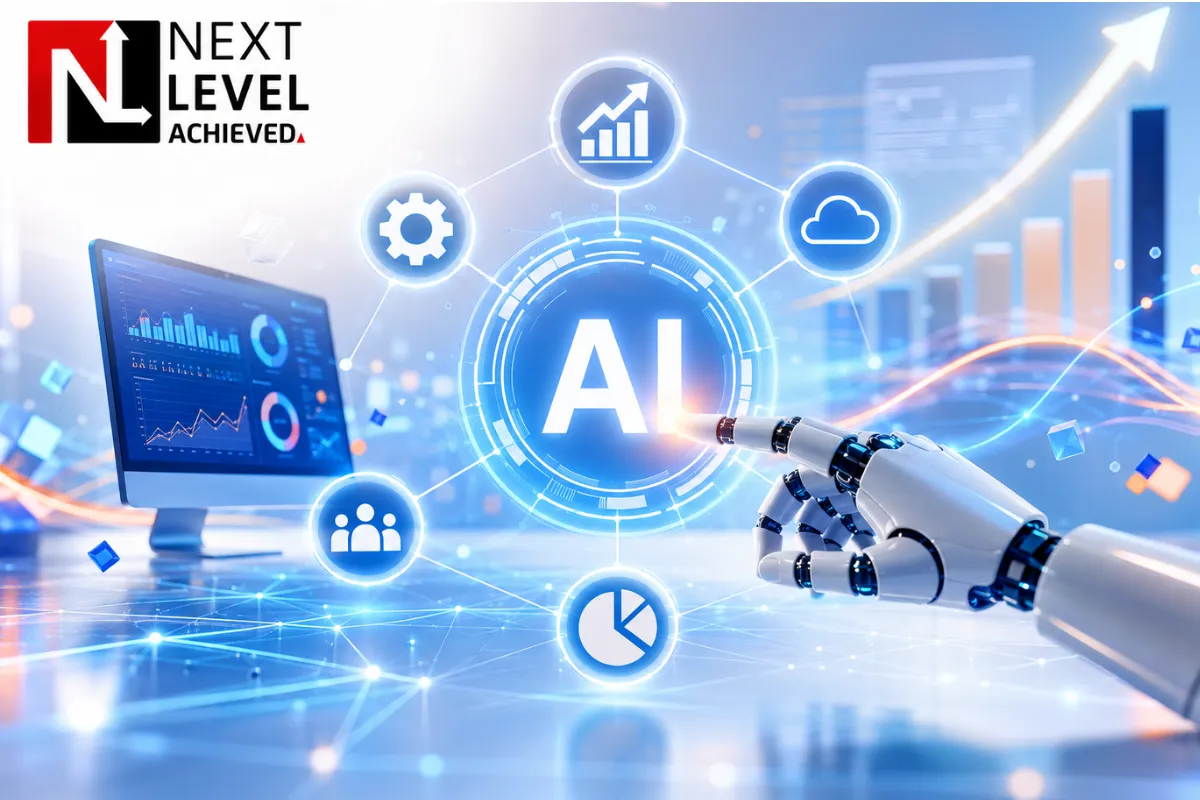
Autonomous, Connected & Data-Driven Business Operations
The Autonomous, Connected, and Data-Driven Future of Business Operations
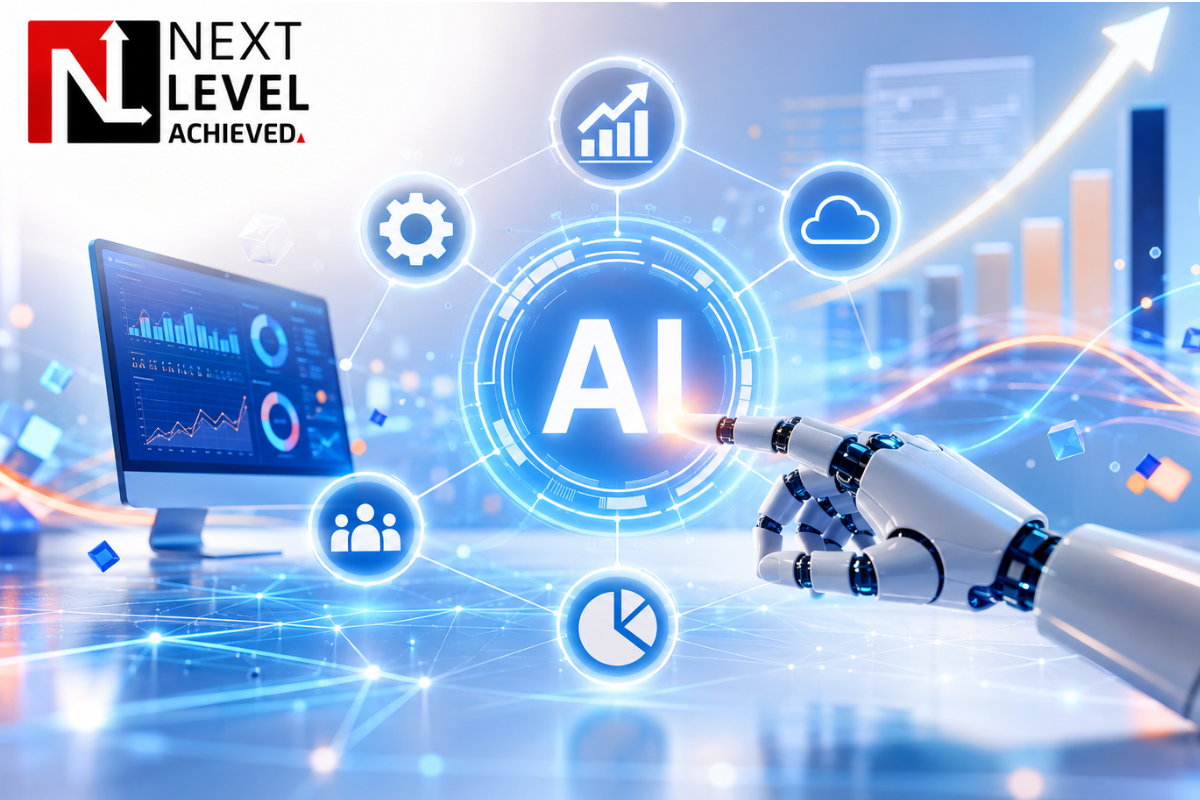
The modern business landscape is undergoing a profound transformation. Traditional operating models built primarily for stability, predictability, and manual oversight are increasingly being challenged by rapid advances in artificial intelligence, automation, and connected technologies.
A new operational paradigm is emerging—one defined by three interconnected pillars: autonomous execution, seamless connectivity, and data-driven decision-making.
Organizations that successfully integrate these capabilities are doing more than automating individual tasks. They are fundamentally redesigning how work is performed, how decisions are made, and how businesses scale.
1. Autonomous: From Rigid Automation to Adaptive Execution
For decades, businesses relied heavily on fixed, rules-based automation. These systems were highly effective when processes were predictable and repetitive, but they offered limited flexibility when circumstances changed.
Modern organizations are moving toward more adaptive systems powered by Artificial Narrow Intelligence (ANI), machine learning, and increasingly sophisticated AI agents. Rather than simply following a predefined sequence, these systems can process changing inputs, identify patterns, and execute predefined objectives with significantly less human intervention.
A substantial share of workplace activities—including data collection, information processing, and predictable operational tasks—can be automated. This creates an opportunity for organizations to shift employees away from repetitive administrative work and toward activities requiring judgment, creativity, relationship-building, and strategic thinking.
Unlike traditional manual processes, automated systems can operate continuously, consistently, and at scale. When implemented responsibly, they can improve productivity, reduce processing time, minimize repetitive errors, and create more consistent operational outcomes.
The objective is not simply to replace human effort. It is to augment human capability and redesign work around higher-value contributions.
2. Connected: Breaking Down Organizational Silos
Autonomous systems become significantly more powerful when they are connected across people, processes, applications, and data.
Connected operations create a digital environment in which information can move efficiently across departments and geographic boundaries, allowing organizations to respond faster and coordinate more effectively.
Seamless Global Collaboration
AI-powered translation and communication tools make it easier for geographically distributed teams to collaborate across languages and time zones.
Intelligent Project Coordination
AI assistants can support routine administrative activities such as answering common questions, organizing information, summarizing meetings, identifying key decisions, and tracking follow-up actions.
Redesigning the Modern Workforce
Connected technologies also make it possible to unbundle traditional jobs into individual tasks and determine which activities should be automated, augmented, or retained as human responsibilities.
As technology assumes more routine data-processing activities, human talent can increasingly concentrate on capabilities that remain difficult to automate effectively—including empathy, leadership, creativity, negotiation, relationship management, complex judgment, and strategic thinking.
This creates a human premium: the greater the automation of routine work, the more valuable uniquely human capabilities can become.
The goal should therefore not be a choice between people and technology. The strongest operating models combine machine efficiency with human intelligence.
3. Data-Driven: From Reactive Management to Predictive Operations
Traditional management often relies heavily on historical reports. Leaders review what happened, identify problems, and then determine how to respond.
Data-driven organizations operate differently.
Modern AI and analytics systems can process enormous volumes of structured and unstructured information, identify patterns, detect anomalies, and generate insights at speeds that would be impossible through manual analysis alone.
This enables businesses to move from a reactive operating model to a predictive and proactive one.
Forecasting Demand
Organizations can use historical and real-time information to improve forecasts for customer demand, inventory, staffing, and resource allocation.
Real-Time Decision Support
AI-powered analytics can provide leaders with timely information about changing conditions, enabling faster and more informed decisions.
Proactive Risk Management
Instead of waiting for problems to become crises, organizations can use anomaly detection and predictive models to identify emerging risks and operational vulnerabilities earlier.
The result is a business that does not simply respond to events—it anticipates them and prepares accordingly.
The Convergence of the Three Pillars
The real transformation occurs when autonomy, connectivity, and intelligence operate together.
Consider a modern business environment in which:
Data continuously flows through connected systems.
↓
AI analyzes that information and identifies opportunities, risks, or emerging patterns.
↓
Autonomous workflows execute appropriate actions within predefined boundaries.
↓
Human leaders provide judgment, oversight, creativity, and strategic direction.
↓
New data is generated from those actions and fed back into the system.
This creates a continuous operational feedback loop—one capable of becoming faster, more intelligent, and more efficient over time.
Conclusion: Designing the Next Generation of Business
The organizations best positioned for long-term growth will not necessarily be those that simply adopt the most technology. They will be the organizations that redesign their operating models around technology while keeping human judgment at the center of critical decisions.
Autonomous systems can reduce repetitive work. Connected platforms can eliminate organizational silos. Data-driven intelligence can transform decision-making from reactive to predictive.
Together, these capabilities can reduce operational friction, improve productivity, accelerate execution, and create new opportunities for scalable growth.
The mandate for modern leaders is increasingly clear:
Stop optimizing manual chaos. Start designing intelligent operations.
The future of business is not simply automated.
It is autonomous, connected, intelligent, and human-centered.
📍 Pembroke Pines • Miramar • Weston • Sunrise • Davie
🔗 nextlevelachieved.com
#PredictiveAnalytics #Automation #AIAgents #FutureOfWork #BusinessStrategy #Leadership2026 #DigitalTransformation #BusinessAutomation #ArtificialIntelligence #OperationalExcellence #NextLevelAchieved
