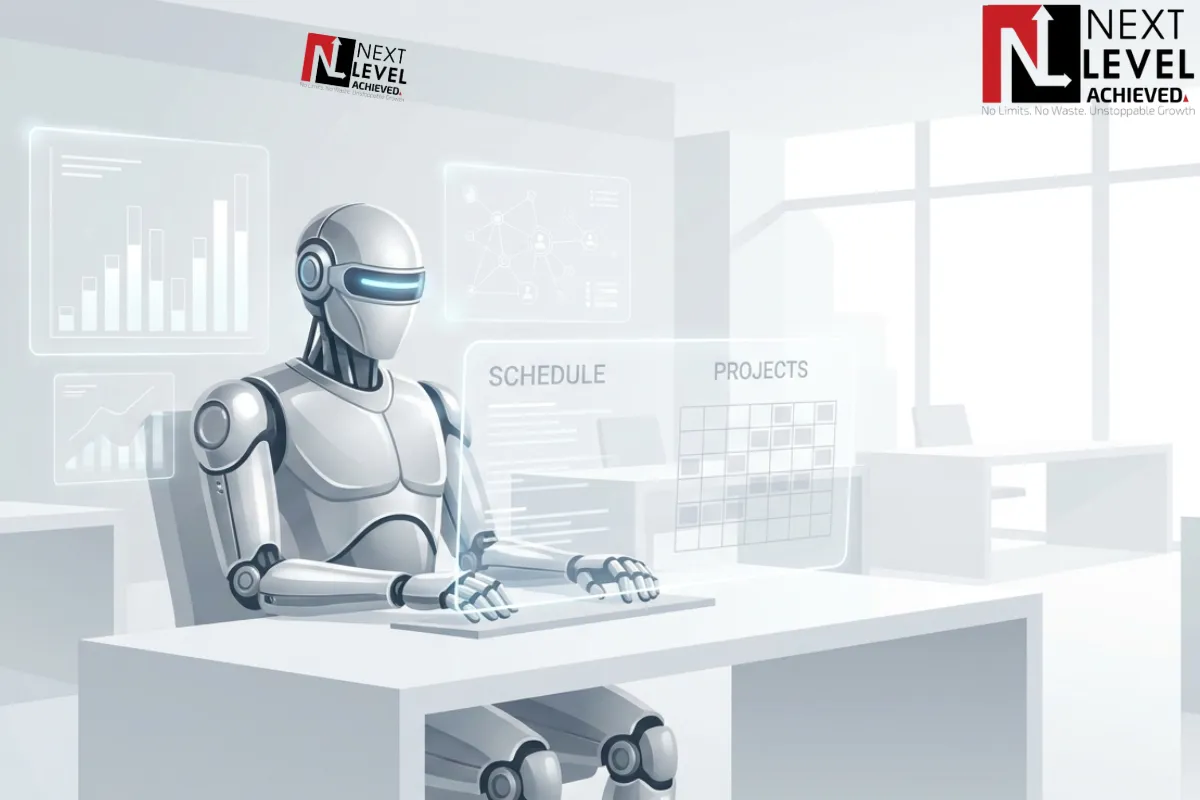
AI Is Becoming Your Digital Employee: The Shift From Tool to Teammate
AI Is Becoming Your Digital Employee: The Shift From Tool to Teammate
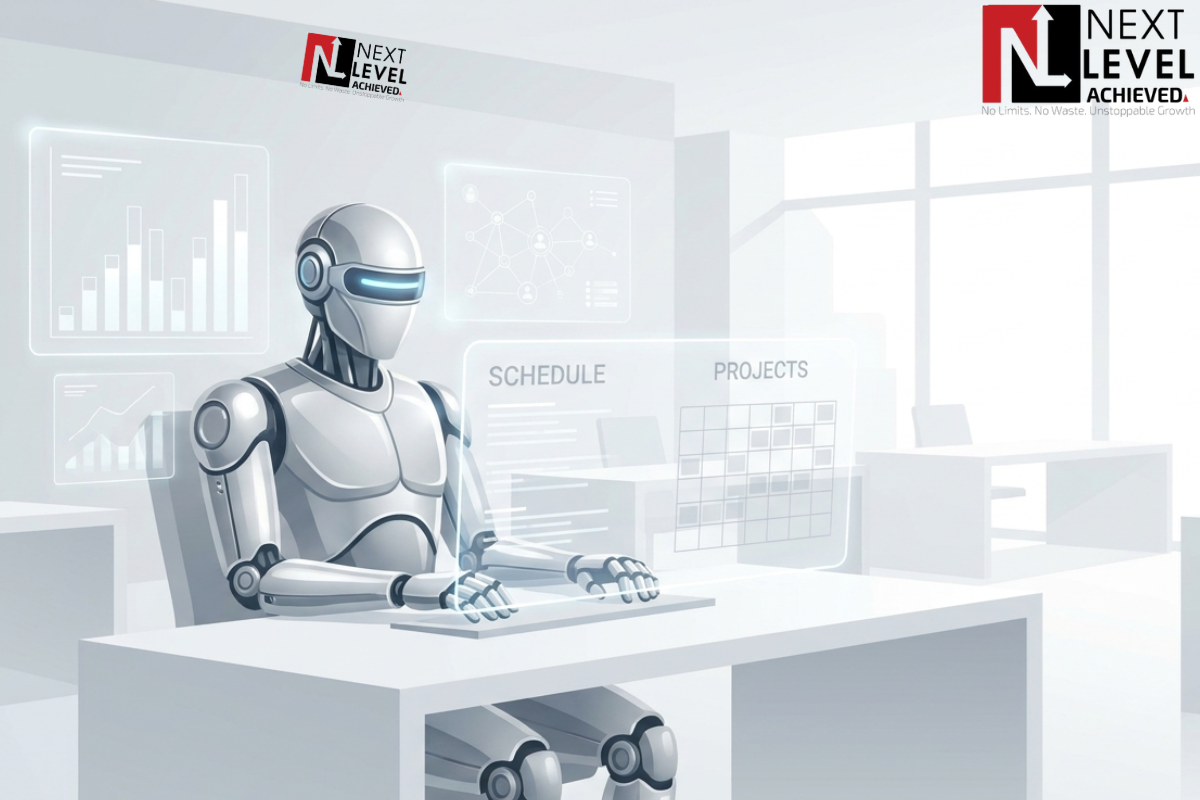
For decades, technology was primarily viewed as a tool—a calculator, spreadsheet, software program, or machine designed to perform specific tasks according to human instructions.
Today, that relationship is changing.
Artificial intelligence is evolving from a tool that simply responds to commands into a more capable digital teammate that can analyze information, make recommendations, generate content, write code, communicate with customers, and complete multi-step workflows with increasing levels of autonomy.
This shift—from traditional automation to AI-powered digital work—is changing how businesses think about productivity, staffing, and the future of work.
The Shift From Automation to Digital Employees
Traditional automation typically follows predefined rules:
If this happens → do that.
Modern AI systems can operate differently. They can process large amounts of information, recognize patterns, interpret natural language, and adapt their responses based on context.
This means AI can increasingly assist with—and in some cases independently perform—tasks that previously required human attention.
AI as a Content Specialist
AI-powered writing systems can help businesses create marketing content, emails, product descriptions, reports, social media posts, and other written materials.
Rather than replacing every content professional, AI can accelerate the drafting and editing process while allowing humans to focus on strategy, creativity, brand voice, and quality control.
AI as a Software Assistant
AI coding systems can generate code, explain programming concepts, identify errors, and assist developers with repetitive development tasks.
This can help software teams move faster while allowing experienced developers to concentrate on architecture, security, problem-solving, and complex technical decisions.
AI in Customer Experience
Customer service is another area undergoing significant transformation.
AI-powered systems can answer frequently asked questions, qualify inquiries, route requests, summarize conversations, provide support, and follow up with customers.
The result is not necessarily a completely human-free customer service department. Instead, businesses can create a hybrid model in which AI handles routine interactions while human employees focus on complex or sensitive situations.
AI as an Analyst
AI can process and organize enormous amounts of information far faster than a person can manually review it.
From business analytics and research to healthcare and financial services, AI can help identify patterns, summarize information, flag potential issues, and support decision-making.
However, in high-stakes fields, human oversight remains essential.
Why Businesses Are Embracing Digital Employees
The appeal of AI-powered digital workers is not difficult to understand.
1. Speed and Availability
Unlike human employees, AI systems do not need breaks, vacations, or traditional working hours.
An appropriately designed automated system can operate continuously, allowing businesses to respond to customers, process information, and trigger workflows outside normal business hours.
2. Scalability
A human employee can only handle a limited number of tasks at once.
An automated system can potentially manage thousands of repetitive interactions or processes without requiring a proportional increase in staffing.
This can be particularly valuable for businesses experiencing rapid growth.
3. Reduced Repetitive Work
Many employees spend significant amounts of time on repetitive administrative tasks:
Data entry
Scheduling
Follow-up emails
Appointment reminders
Report generation
Information gathering
Lead qualification
CRM updates
Automating these activities can give employees more time to focus on work that requires judgment, creativity, communication, and relationship-building.
4. Greater Consistency
When properly designed and monitored, automated workflows can perform repetitive processes consistently.
However, consistency does not automatically mean accuracy. AI systems can make mistakes, misunderstand context, or produce unreliable information.
That is why human oversight, quality control, and responsible implementation remain critical.
AI Is Not Replacing Entire Jobs—It Is Changing Jobs
One of the biggest misconceptions about AI is that every job will simply disappear.
The reality is more nuanced.
Most jobs consist of multiple tasks. Some of those tasks may be highly repetitive and suitable for automation, while others require uniquely human abilities.
For example, a marketing manager may spend part of the day:
Researching information
Writing reports
Creating content
Analyzing data
Communicating with clients
Developing strategy
AI may be able to assist with several of those activities, but strategic judgment, relationship management, leadership, and creative direction still require meaningful human involvement.
This is why businesses should think less about “AI replacing employees” and more about “AI transforming how employees work.”
The Rise of the Human Premium
As AI takes over more routine tasks, uniquely human skills become increasingly valuable.
These include:
Empathy
Leadership
Critical thinking
Complex problem-solving
Negotiation
Relationship building
Creativity
Strategic judgment
Ethical decision-making
Communication
These capabilities represent the Human Premium—the value people bring to work that cannot easily be reduced to automation.
The future workplace is therefore unlikely to be purely human or purely automated.
Instead, the strongest organizations may be those that combine the strengths of both.
AI provides speed, scale, and automation.
People provide judgment, creativity, empathy, and leadership.
How Businesses Can Prepare for the AI Workforce
Organizations should not wait until AI has completely transformed their industry before preparing their teams.
A practical transition can begin with three steps.
1. Conduct a Skills and Workflow Audit
Identify where your employees spend the most time.
Ask:
Which tasks are repetitive?
Which processes require manual data entry?
Where are employees spending time copying information between systems?
Which customer questions are repeated frequently?
Which administrative tasks could potentially be automated?
The goal is to identify opportunities—not simply to automate everything.
2. Build AI Literacy
Employees need to understand how AI works, what it can do, and where its limitations are.
Training should include:
Effective AI prompting
Data literacy
AI-assisted research
Evaluating AI-generated information
Privacy and security
Responsible AI use
Human review and quality control
AI literacy should become a practical workplace skill rather than something limited to technical teams.
3. Create a Culture of Continuous Learning
AI technology is evolving rapidly.
The skills employees need today may not be the same skills they need several years from now.
Organizations that invest in continuous learning can help employees adapt rather than fear technological change.
The goal should be to create a workforce that is AI-enabled, not AI-dependent.
The Future Is Human + AI
The rise of the digital employee does not have to mean the end of human work.
Instead, it represents an opportunity to rethink what human employees should spend their time doing.
Let AI handle repetitive execution.
Let automation manage predictable workflows.
Let humans focus on strategy, relationships, creativity, judgment, innovation, and impact.
The real competitive advantage may not come from simply having access to AI.
It may come from knowing how to integrate AI into your business effectively.
The question is no longer:
“Will AI change the way we work?”
The better question is:
“Which parts of our work should AI handle so our people can focus on what they do best?”
The Bottom Line
AI is evolving from a passive tool into an increasingly capable digital teammate.
Businesses that thoughtfully combine AI, automation, and human expertise can create faster workflows, improve productivity, reduce repetitive work, and give employees more time to focus on meaningful work.
The future of work isn't humans versus AI.
It's humans working smarter with AI.
Disclaimer
This content is for educational and informational purposes only and does not constitute professional, financial, legal, or technical advice. AI capabilities and limitations continue to evolve, so organizations should evaluate AI tools carefully and maintain appropriate human oversight.
