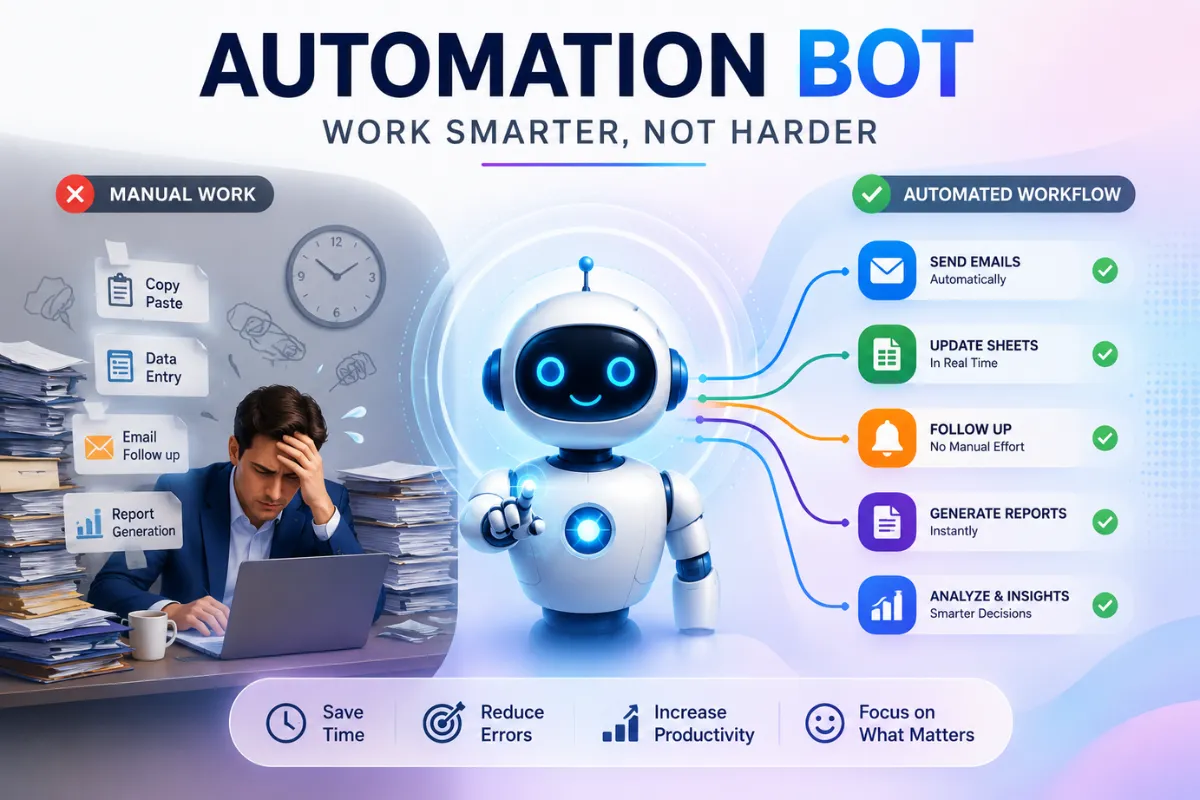
AI Automation vs. Traditional Automation: Key Differences Every Business Leader Should Know
AI Automation vs. Traditional Automation: What’s the Difference?
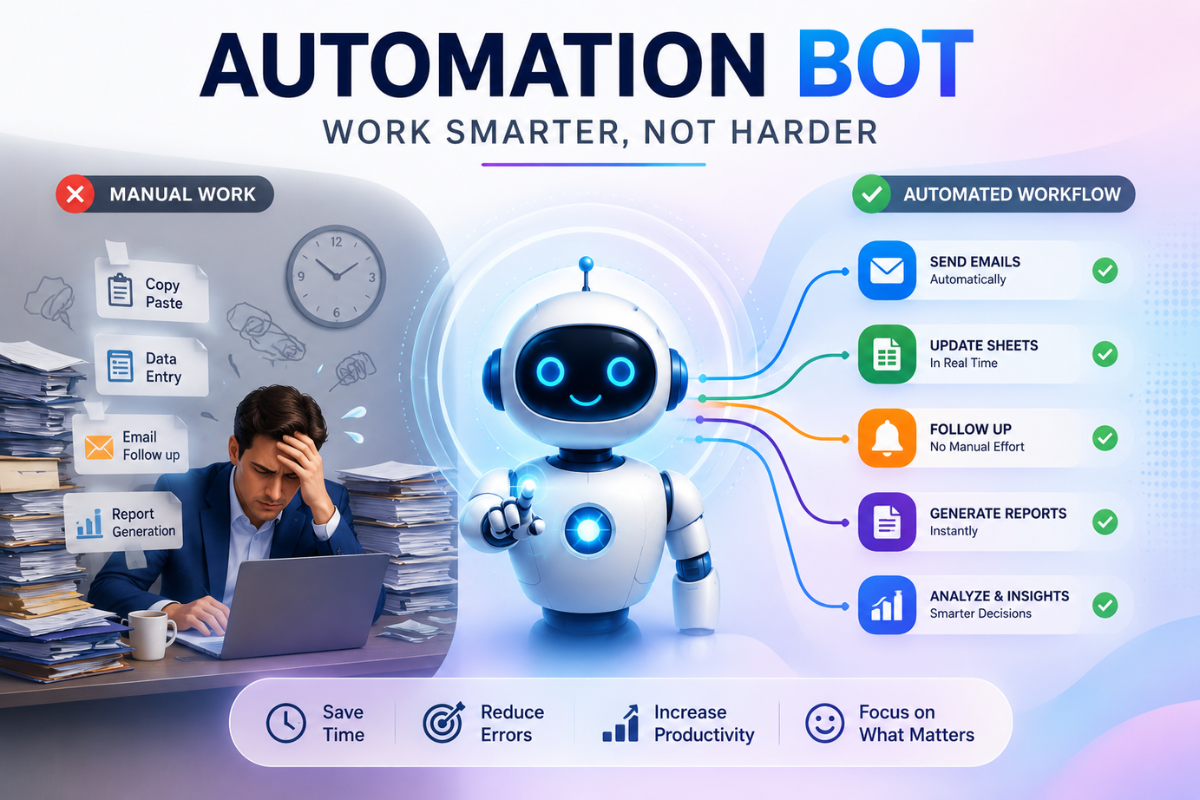
For decades, businesses have used automation to streamline operations, reduce costs, improve consistency, and increase productivity. But as artificial intelligence becomes embedded in modern business systems, a critical distinction is emerging:
Traditional automation executes predefined instructions. AI automation can interpret information, recognize patterns, and adapt its response to changing circumstances.
The difference is more than technical. It represents a fundamental shift in how organizations design workflows, allocate human talent, and scale decision-making.
Understanding that distinction is becoming essential for leaders planning the next stage of digital transformation.
Traditional Automation: The Rule-Based Engine
Traditional automation is built around explicit rules, predefined workflows, and predictable inputs and outputs.
A human defines the process, establishes the conditions, and programs the system to execute those instructions consistently.
How it works
A traditional automation system generally follows a structure such as:
If X happens → perform Y.
For example:
If a customer submits a form, create a record.
If an invoice exceeds $5,000, send it for approval.
If inventory falls below a defined threshold, create a purchase order.
If an employee submits a request, route it to the appropriate department.
The system performs these tasks quickly and consistently—but only within the parameters it has been designed to recognize.
Key characteristics
Traditional automation is particularly effective when processes are:
Repetitive
Predictable
Rules-based
High-volume
Structured
Stable over time
Its greatest strength is consistency.
Its limitation is adaptability.
When an unexpected situation occurs, the system generally requires a new rule, workflow modification, or human intervention.
Common examples
Traditional automation includes:
Spreadsheet macros
Scheduled data transfers
Rule-based workflow systems
Automated invoice routing
Robotic process automation (RPA)
Automated notifications
Manufacturing robots
Predefined approval workflows
Traditional automation does not need to "understand" the task. It needs to execute the instructions correctly.
AI Automation: The Adaptive Layer
AI automation introduces a different capability.
Instead of relying exclusively on predetermined rules, AI systems can process large amounts of information, identify patterns, interpret unstructured data, generate outputs, and make context-dependent recommendations or decisions.
This makes AI automation particularly valuable for processes where the inputs are variable and the correct response cannot be fully described through a fixed set of rules.
How it works
Rather than simply following:
If X → do Y
an AI-enabled workflow can evaluate:
What is happening, what does the information mean, and what action is most appropriate based on the available context?
For example, an AI system could:
Read and classify incoming emails.
Extract information from documents.
Summarize lengthy reports.
Identify unusual patterns in financial data.
Analyze customer conversations.
Draft personalized responses.
Prioritize leads based on multiple signals.
Recommend the next action for an employee.
Interpret natural-language requests.
The important distinction is that AI can operate on less-structured information and more variable scenarios than conventional rule-based automation.
Key characteristics
AI automation can provide:
Pattern recognition
Natural-language understanding
Document and image analysis
Prediction and classification
Content generation
Context-aware recommendations
Adaptive decision support
Greater flexibility with unstructured data
However, AI is not infallible.
AI systems are generally probabilistic rather than deterministic, meaning their outputs can vary based on context, data, model behavior, and the way a task is presented.
That is why responsible AI automation requires appropriate human oversight, validation, security controls, and governance.
Traditional Automation vs. AI Automation
FeatureTraditional AutomationAI AutomationCore LogicPredefined rules and workflowsModels, patterns, context, and instructionsInputsPrimarily structured dataStructured and unstructured dataFlexibilityLimited to predefined scenariosBetter suited to variable scenariosOutputUsually deterministicOften probabilisticBest ForRepetitive, predictable processesComplex, variable, cognitive processesLanguage UnderstandingLimitedStronger natural-language capabilitiesDecision SupportRule-basedPattern- and context-basedHuman RoleDefines and manages the workflowOversees, validates, governs, and handles exceptionsPrimary AdvantageConsistency and efficiencyAdaptability and intelligence at scale
The distinction is important—but businesses should not think of these technologies as competing alternatives.
The most effective organizations will combine them.
The Real Opportunity: Combining Automation With AI
A common mistake is assuming that every business process should be replaced with AI.
It shouldn't.
Many processes are already highly predictable and are better handled by traditional automation.
For example:
A payment reminder does not necessarily need AI.
A predefined workflow can automatically send the reminder when an invoice reaches a specific status.
But consider a customer who sends a long email explaining a billing dispute, references several previous conversations, attaches supporting documents, and asks for a customized resolution.
That is where AI can add significant value.
A sophisticated workflow might look like:
Traditional Automation → AI → Traditional Automation → Human
For example:
A customer email enters the system.
Automation captures and routes the message.
AI analyzes the email and supporting documents.
AI determines the likely category and urgency.
The workflow updates the CRM.
A response is drafted.
A human reviews the response when required.
Automation sends the approved communication and records the outcome.
This is not about replacing automation.
It is about adding intelligence to the parts of the workflow that require interpretation.
The Bigger Shift: From Automating Tasks to Redesigning Work
This is where the conversation becomes strategically important.
Traditional automation largely focused on automating tasks.
AI enables organizations to begin redesigning entire workflows around the capabilities of both humans and machines.
Instead of asking:
"Which task can we automate?"
Leaders should increasingly ask:
"Which parts of this process require judgment, which require intelligence, which require human interaction, and which can be executed automatically?"
That shift changes how organizations approach productivity.
A single job may contain dozens of activities.
Some are repetitive.
Some require analysis.
Some require communication.
Some require judgment.
Some require empathy.
Some require accountability.
AI does not need to replace the entire role to create significant value.
It can transform the economics of the role by handling selected activities while allowing employees to spend more time on higher-value work.
The Human Premium
As AI becomes increasingly capable of handling routine cognitive tasks, the value of distinctly human capabilities becomes more important—not less.
These include:
Leadership
Strategic thinking
Empathy
Relationship building
Negotiation
Creativity
Critical thinking
Ethical judgment
Complex problem-solving
Accountability
The future of work is therefore unlikely to be a simple choice between humans and machines.
The competitive advantage will increasingly come from humans working effectively with machines.
Organizations that successfully redesign their workflows can allow technology to handle more repetitive processing while employees focus on areas where context, judgment, relationships, and responsibility matter most.
What This Means for Business Leaders
AI adoption should not begin with the question:
"Where can we add AI?"
It should begin with:
"Where is our business losing time, information, consistency, or decision-making capacity?"
A practical AI automation strategy should examine the entire workflow.
1. Map the Process
Identify how work actually moves through the organization—not how the process is supposed to work on paper.
2. Identify Bottlenecks
Look for repetitive administrative work, manual data entry, fragmented information, delayed responses, and unnecessary handoffs.
3. Separate Rules From Judgment
Determine which activities can be handled through deterministic automation and which require interpretation, prediction, or contextual reasoning.
4. Introduce AI Where It Adds Real Value
Use AI for tasks involving unstructured information, language, classification, summarization, pattern recognition, recommendations, and other areas where traditional automation becomes difficult to maintain.
5. Keep Humans in the Right Places
Not every decision should be automated.
High-impact, sensitive, or ambiguous decisions may require human review, approval, or accountability.
6. Measure the Outcome
The objective is not simply to deploy AI.
The objective is to improve measurable business outcomes:
Less manual work. Faster execution. Better customer experiences. Fewer errors. Stronger decisions. Greater scalability.
The Future Is Not Automation vs. AI
The most important distinction is not whether a company uses traditional automation or AI automation.
It is whether the organization understands where each technology creates the greatest value.
Traditional automation remains extremely powerful for structured, predictable processes.
AI automation expands the opportunity into areas where information is complex, variable, and difficult to process through fixed rules alone.
Together, they create something far more powerful:
Intelligent workflows that combine the reliability of automation with the adaptability of AI and the judgment of people.
The organizations that gain the greatest advantage will not simply automate more tasks.
They will redesign how work gets done.
That is the real transformation.
Ready to identify where AI can create measurable value in your business?
At Next Level Achieved, we help businesses evaluate their existing workflows, identify automation opportunities, and build practical AI-powered systems designed around real operational needs—not technology for technology's sake.
The question is no longer whether AI will change how businesses operate.
The question is whether your business will be prepared to change with it.
