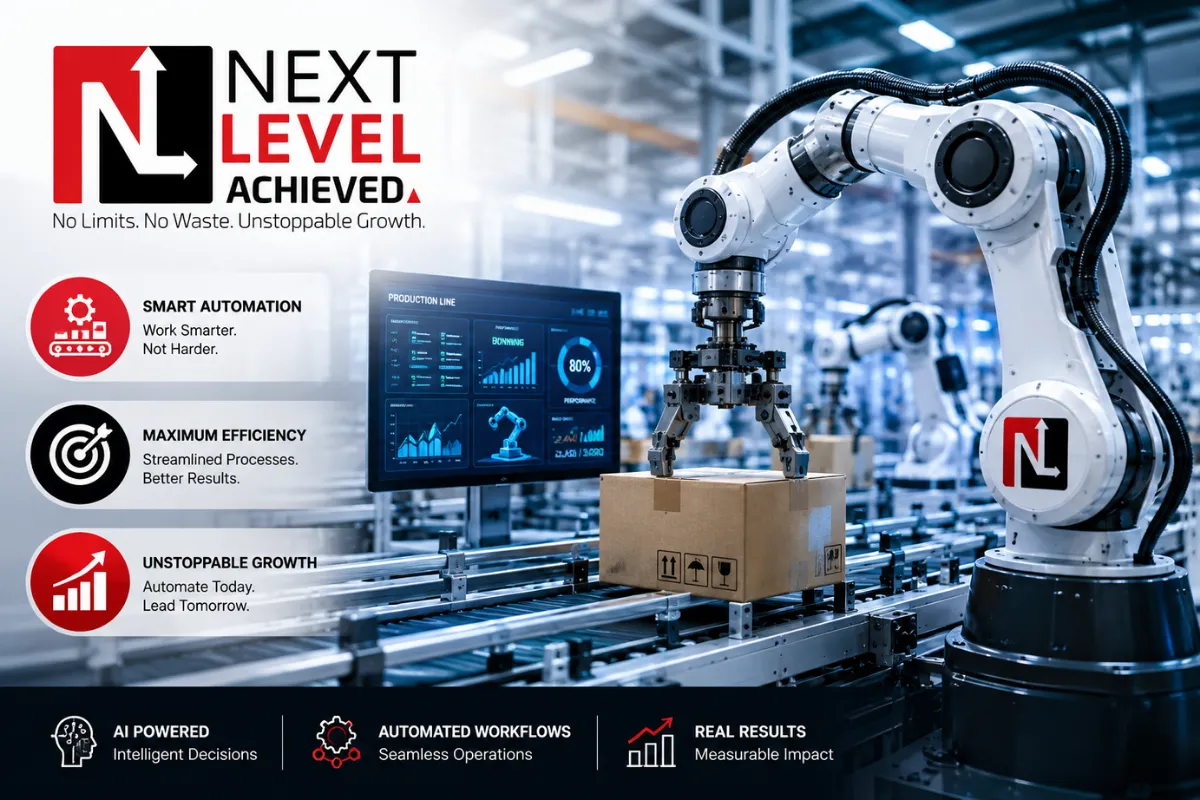
AI and Automation: Building the Digital Workforce of the Future
The Convergence of AI and Automation: Architecting the New Digital Workforce
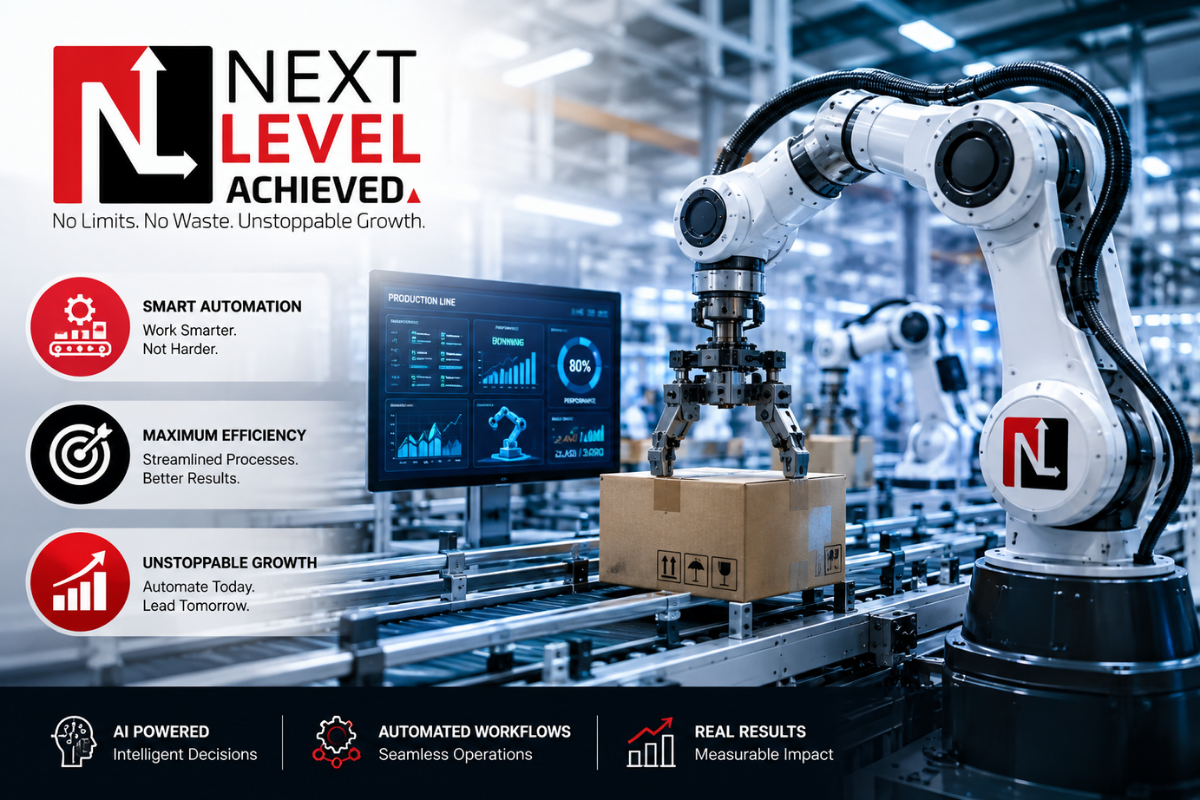
AI is not simply changing the tools businesses use. It is changing the architecture of work itself.
The modern business landscape is undergoing a fundamental transformation in how work is designed, executed, and delivered. Organizations are moving beyond simply adopting software to help employees complete existing tasks. They are beginning to build a digital workforce in which Artificial Intelligence (AI), automation, and human expertise operate together.
This shift represents more than a technology upgrade. It is an organizational redesign.
The leaders who gain the greatest advantage will not be those who simply purchase the newest AI tools. They will be the leaders who understand which work should be automated, which decisions should be augmented, and where human judgment creates the greatest value.
When AI and automation are strategically integrated, organizations can reduce repetitive workloads, accelerate processes, improve consistency, and give their people more time to focus on higher-value work.
The Anatomy of the Digital Workforce: Intelligence Meets Execution
The digital workforce is built around two complementary capabilities: automation and intelligence.
The Muscle: Traditional Automation
Traditional automation is generally rules-based and deterministic.
It is designed to execute repetitive, predictable tasks exactly as programmed. Examples include automated data transfers, scheduled workflows, spreadsheet processes, manufacturing systems, notifications, and rule-based administrative operations.
Its greatest strengths are speed, consistency, scalability, and precision.
But traditional automation has a fundamental limitation: it does not truly understand context.
When conditions change or an unexpected situation occurs, human intervention or additional programming is often required.
The Brain: Artificial Intelligence
AI introduces a different capability: adaptive intelligence.
AI systems can analyze large volumes of structured and unstructured information, recognize patterns, interpret language, generate content, identify relationships, summarize information, and support complex decision-making.
This makes AI particularly powerful when dealing with work that previously required significant human cognitive effort.
When AI and automation are combined, something more powerful emerges.
AI can determine what needs to happen. Automation can make it happen.
For example, an AI system can interpret an incoming request, determine the appropriate next step, extract relevant information, and initiate a workflow. Automation can then update systems, send communications, create tasks, route information, and trigger follow-up actions.
The result is a digital workforce capable of moving information and processes through an organization with significantly less manual intervention.
The Scale of the Opportunity
The potential impact is substantial.
McKinsey's research indicates that currently demonstrated technologies could theoretically automate activities representing approximately 57% of current U.S. work hours. Importantly, this does not mean that 57% of jobs will disappear. It means that a significant amount of the work performed inside existing jobs could potentially be handled differently.
Earlier McKinsey research similarly found that fewer than 5% of occupations could be fully automated using currently demonstrated technologies, while approximately 30% of activities in 60% of occupations could be automated.
That distinction is critical.
The future of automation is not primarily about eliminating jobs.
It is about reengineering tasks.
Routine data collection, processing, administrative coordination, document preparation, repetitive communication, and predictable workflows are among the areas where automation can create significant value.
Machines can perform these activities continuously and consistently, allowing human professionals to spend more time on judgment, relationships, strategy, creativity, and problem-solving.
The objective is not simply to make employees work faster.
The objective is to eliminate low-value work so employees can create higher-value outcomes.
Unbundling Jobs: Unlocking the Human Premium
The most productive question leaders can ask is no longer:
"Will AI replace this employee?"
A better question is:
"Which parts of this employee's work should be performed by technology, and which parts become more valuable because a human is doing them?"
This is the beginning of job unbundling.
Traditional roles are collections of many different activities. Some require judgment, empathy, creativity, negotiation, leadership, and relationship building. Others involve repetitive administrative execution.
AI and automation can increasingly absorb portions of the second category.
That creates an opportunity to rebundle human roles around the Human Premium.
The Human Premium includes capabilities such as:
Empathy and relationship building
Leadership and influence
Strategic judgment
Complex negotiation
Creative thinking
Critical thinking
Ethical decision-making
Communication
Problem-solving in ambiguous situations
Building trust with customers, patients, employees, and stakeholders
These capabilities do not become less important in an AI-enabled organization.
They become more important.
The World Economic Forum's Future of Jobs 2025 research reinforces this direction, identifying AI and big data among the fastest-growing skills while emphasizing the continuing importance of analytical thinking, creativity, resilience, flexibility, leadership, and collaboration.
The future is therefore not simply human versus machine.
It is increasingly:
Human + AI + Automation
From Automation to Augmentation
The most mature organizations will move beyond using AI merely as a productivity tool.
They will use it to augment the entire operating model.
Imagine a business where:
AI reads and interprets information.
Automation moves the information.
Systems trigger the next action.
Employees handle exceptions and complex decisions.
Leaders focus on strategy and growth.
That is fundamentally different from simply giving employees an AI chatbot.
It is the beginning of an intelligent operating system for the organization.
The competitive advantage will come from connecting these capabilities across departments rather than deploying isolated AI tools.
The Operational Roadmap for Leaders
AI and automation should not be implemented simply because the technology is available.
They should be implemented because they solve a clearly identified business problem.
1. Audit the Work Before Automating It
Start by mapping how work actually moves through the organization.
Identify:
Repetitive tasks
Manual data entry
Duplicate processes
Administrative bottlenecks
Communication delays
Manual reporting
Repetitive customer interactions
Processes that require unnecessary handoffs
The goal is not to automate everything.
The goal is to identify where automation creates the greatest strategic value.
2. Redesign the Workflow
Do not simply automate a broken process.
Redesign it first.
Determine which activities should be handled by AI, which should be automated through rules-based systems, which require human review, and which decisions should remain entirely human.
This creates a more resilient human-machine workflow.
3. Build AI Literacy Across the Organization
AI transformation cannot be limited to IT departments.
Employees need practical AI literacy, including:
Understanding AI capabilities and limitations
Data literacy
Effective prompting and AI interaction
Evaluating AI-generated information
Responsible AI usage
Privacy and security awareness
Ethical decision-making
Human oversight
The goal is not to turn every employee into an AI engineer.
The goal is to help every employee understand how AI can make their work better.
4. Establish Human Oversight and Governance
Speed without governance creates risk.
Organizations should establish clear guidelines for:
Data privacy
Security
Accuracy
Human review
Accountability
Bias
Regulatory requirements
Appropriate use of AI-generated information
The more deeply AI becomes embedded in operations, the more important responsible oversight becomes.
5. Build Agile, Cross-Functional Teams
The traditional top-down organizational structure may not be sufficient for an environment where technology, customer expectations, and business models are changing rapidly.
Organizations should encourage:
Cross-functional collaboration
Faster decision-making
Continuous experimentation
Rapid feedback
Shared accountability
Continuous learning
AI transformation is not a one-time technology project.
It is an ongoing operating-model transformation.
The Real Competitive Advantage
The organizations that successfully adopt AI will not necessarily be those with the largest technology budgets.
They will be the organizations that learn how to combine technology, processes, and people more effectively than their competitors.
A company that automates a bad process simply produces bad outcomes faster.
A company that redesigns the process, introduces intelligent automation, trains its people, and maintains appropriate human oversight can create something far more valuable:
a scalable organization that learns and improves continuously.
This is where the real competitive advantage begins.
Embracing the Opportunity
AI and automation have the potential to reduce repetitive work, shorten cycle times, improve consistency, increase operational capacity, and enable organizations to scale without simply adding more layers of administrative work.
But the greatest opportunity is not doing yesterday's work faster.
It is deciding that some of yesterday's work should no longer be done by humans at all.
When machines handle repetitive execution, people gain capacity for creativity, leadership, relationships, innovation, and strategic thinking.
That creates the possibility of organizations that are not only more efficient, but also more adaptable, intelligent, and human-centered.
The future of work will not be defined by the companies that use the most AI.
It will be defined by the companies that understand how to orchestrate humans, AI, and automation into one intelligent system.
The future belongs to leaders who stop managing the manual past and start architecting the collaborative, intelligent, and augmented future.
#ArtificialIntelligence #Automation #DigitalWorkforce #FutureOfWork #AITransformation #BusinessStrategy #Leadership #AILeadership #WorkplaceInnovation #NextLevelAchieved
